Practice responsible cuteness by playing wildlife rescues safe
 @lizexmachina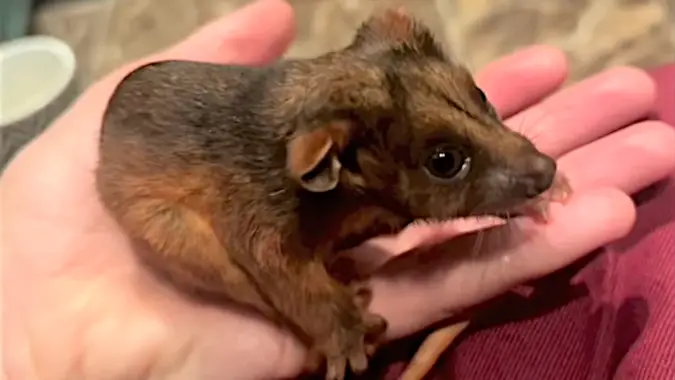
Welcome to another Monday, friends, and a post-holiday Monday at that (at least in the United States). You know what you don’t expect during a holiday? Coming across something cute but injured! But we’re here to discuss another critical cuteness topic — safely participating in an animal rescue.
Let’s kick off with another video courtesy of Kehl from our community Discord:
Starting off is a bat rescuer in Queensland called in on a case of mistaken identity for a ring-tailed possum. If you come across an injured or unresponsive animal, this is the best thing you can do — call in the experts! They have the tools — fluids, safe carrying methods, gloves, you name it. Additionally, the video wraps with an excellent heads up that deserves highlighting: “This joey is not a pet; she’s a wild baby who has fallen off her mum in the wild weather. She will be raised in care, buddied with other ringtails & released when she’s ready to fend for herself.” This is truly the best outcome for injured wild critters — safe rehabilitation with expert caregivers, grouped with their species, and the eventual goal of return to the wild.
Animal rescue is a risky business. If you come across an injured animal, regardless of its type, contacting local animal control should be your first step. Do not just go straight to touching a potentially injured or sick animal, be it domesticated or wild. This is the fastest way to do the most harm — both to yourself and the critter involved. Animal control will ask you an array of questions, all of which can be answered through observations. Make sure any interactions you have are under instructions — or better yet, wait for an expert to arrive on the scene.
National Geographic Animals’ video highlights Alaskan conservation centers doing exactly this, lending their expertise in caring for rescued and injured wildlife. The centers are staffed to meet the requirements of even more effort, energy, and expertise than domestic animals. The wolves, sea otters, bison, puffins and more featured here highlight precisely why these centers are so critical — they are best prepared for an incredible variety of needs, including those found in providing extended care.
As a bonus, let’s wrap on a super-cut from cuteness (and happy critter endings) extraordinaires, The Dodo. After all, everyone could use additional warm fuzzies, as well as an important reminder. Your instincts may point you to an animal hospital or shelter. However, depending on your area’s rules and regulations, your veterinarians legally cannot treat wildlife. Vet offices (and many shelters) are solutions primarily for domesticated pets; for example, they can scan for a microchip if you find a stray domesticated animal like a dog or cat. Local shelters and animal control are also equipped to do the same. This can make all the difference in finding a lost animal’s home!
If you’d like to learn more about safely and responsibly rescuing injured wildlife, please check out the following resources:
- International Wildlife Rehabilitation Council
- How to help orphaned or injured animals from Best Friends Animal Society
- What to do in a wildlife emergency from Chintimini Wildlife Center
- Local wildlife sanctuaries and rescue organizations, like Rockfish Wildlife Sanctuary in Virginia or Tri-State Bird Rescue in Delaware
- Your state / locality’s Department of Natural Resources, Department of Wildlife, or Animal Control Office
Please consider supporting our Patreon!
Join the Discussion
Blizzard Watch is a safe space for all readers. By leaving comments on this site you agree to follow our commenting and community guidelines.