Here’s what I thought about Diablo 4: Lord of Hatred after playing for 40 hours
Diablo 4: Lord of Hatred is due out on April 27 in North and South America (April 28 in the rest of the world), but I’ve already had a chance to play through the game, and I loved it. I’ll be going into a lot more detail, but that’s the bottom line. Lord of Hatred isn’t just a trip to the Skovos Isles. It isn’t just another new (excellent) story. It isn’t just the new Warlock and Paladin classes. It’s an expansion that overhauls core systems in great ways, making every class feel more powerful, end-game progression systems more accessible, and difficulty more granular. In Lord of Hatred, you have more control over how your character plays and what activities you do to progress, and the game feels great.
I don’t say that lightly. I wasn’t a big fan of the previous expansion, Vessel of Hatred. I know a lot of people enjoyed it, and I thought it was fine, but I didn’t love it. The vibe of Nahantu and the Spiritborn didn’t do anything for me, and the narrative felt rushed (and then it ended just when it was getting exciting). That’s okay. Not every game has to be for me, personally, but after my experience with VoH I lowered my expectations for Lord of Hatred.
But the latest expansion blew me away. It had everything I enjoyed about the original Diablo 4, with an engaging story and an interesting new world to explore, with lots of lore about places we’ve never seen. But it also refined Diablo 4’s gameplay, making it easier to customize your playstyle without spending hours grinding for the perfect gear before you can even get started. End game systems are refined too, and War Plans let you customize your end game, deciding which activities you want to do and how they’ll play.
Lord of Hatred isn’t perfect, but I had a ton of fun playing it, and even though I’ve just dumped 40 hours into playing the expansion, I’m going to keep playing it when it launches next week. In fact, I can’t wait to get back into the game.
What I liked (and didn’t like) about Lord of Hatred
This expansion is massive, so let’s go through what I thought about my time playing Lord of Hatred, feature by feature.
The Lord of Hatred story. No spoilers here, because I want you to enjoy the expansion’s story for yourself. But I had a good time playing it, and it had some twists that had me shouting at my monitor (in a good way). While I have some narrative quibbles, I think it’s easily as good as the original Diablo 4 story, which I thought was excellent. If you’re interested in more lore, there’s a tie-in novel called The Lost Horadrim which chronicles a previous expedition to the Skovos Isles by Lorath, Donan, and Tyrael. It’s not required to understand Lord of Hatred, but it provides a lot of background on how the land fared in the wake of Malthael’s culling, and introduces a major character. (We talked about the book on the Lore Watch Podcast. I’ll say we more or less enjoyed it, though it’s slow to get started and we wish it were a hundred pages longer.)
Visiting Skovos for the first time. As a fan of the Diablo 2 Amazon, I was thrilled to know we were heading to Skovos. I was less thrilled that I wouldn’t be able to play an Amazon myself, but I was still excited to learn more about the Amazons and Oracles in the ancient home of the firstborn. The environments are unlike anything we’ve seen in any Diablo game, with the bright color palette and sunny shores that show us a part of Sanctuary where hope lives on… or at least it did, until we arrived chasing Mephisto. Expect Mediterranean vibes and bright blue seas, perfect for fishing (I’ll talk more about that later).
It has been a joy to explore Skovos, and I particularly liked the Strongholds with their own interesting narratives and unique settings. It’s unfortunate that Strongholds typically have greatly diminished significance in end-game play, but I love them, and particularly liked how these fit into Skovos’ lore.
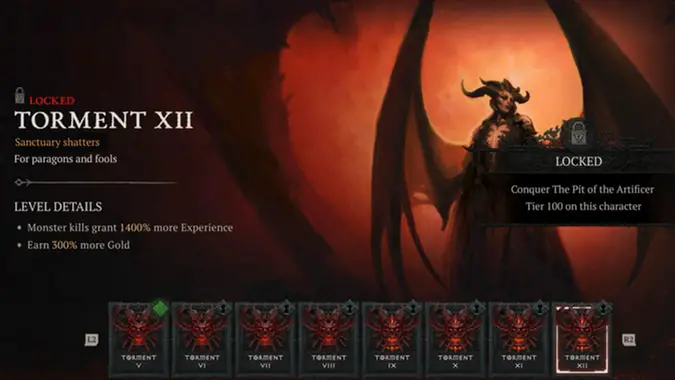
New difficulty levels. Diablo 4 currently has eight difficulty levels, but in Lord of Hatred it will have 16, with 12 Torment difficulties on top of the standard Normal, Hard, Expert, and Penitent difficulties. Many long-time players are wary of this because Diablo 3 had a massive number of Torment difficulties and only a few of them were worth playing — but I’ve always felt that Diablo 4 didn’t have sufficiently granular difficulty options, which left you playing at a difficulty that was too easy to be interesting because the next difficulty up was still too hard. Each Torment level jumps up five to 10 Pit tiers in difficulty, and you have to run the appropriate-level Pit to unlock them, so you’ll never find yourself out of your depth. The new Torment levels let you amp up difficulty slowly, with XP and loot improving at every level. I think it works great.
Player power progression. Progression in Lord of Hatred is fast, and I think that’s a good thing. A lot of the joy of playing Diablo 4 is slaughtering massive crowds of demons and raking in piles of loot to power yourself up further, and when progression slows to a crawl, the dopamine hit of getting a new upgrade slows to a crawl, too. In LoH, levels and paragon levels both come quickly, and the loot piles up (with a new loot filter to help you sort through it all). I played up to paragon 124 and Torment 6 without feeling like the game became a slow grind, and I feel like the new difficulty levels helped with that. Instead of getting stuck on a lower difficulty level, I could slowly raise the Torment level and improve my XP earnings as I did.
There’s a fine line between making advancement too fast and making advancement too slow, and while I feel like this hits a good place for fun, it may also mean you reach the late game quickly and run out of things to do. We’ll have to see how it feels when the game is out and we have more time to play and evaluate the difficulty curve.
New classes, the Paladin and the Warlock. These two classes bring an interesting dichotomy to the expansion, letting players embrace their angelic or demonic sides with their class choice. And even though I would have loved to see an Amazon class added, this pair is a good fit for Skovos, where the first Nephalim were born, and where they built shrines to angels and demons alike. Players who pre-ordered the expansion have already been playing the Paladin, which is good smiting fun (with some changes in the expansion). But the Warlock will be brand new to everyone, and while I wasn’t sure about this new class, I enjoyed it in spite of myself — it plays like a hybrid of a Necromancer and Sorcerer, which you can spec into more caster-oriented builds or focus on summoning minions.
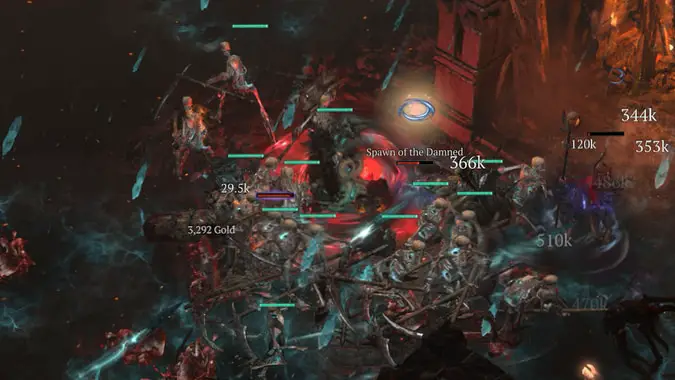
Massive updates to existing classes. When new classes are added to Blizzard games, they often launch a little overpowered. But Blizzard has clearly put a lot of work into elevating every class in the game with an all new talent philosophy that eschews passive talents (which are now the domain of the paragon boards) and focuses on modifying skills to fine tune your playstyle. A lot of these modifiers are familiar: you’ll find many of your favorite legendary powers are now in the skill tree (though there’s also a lot that’s brand new). Builds also come online much earlier than they used to, because — while gear still provides big power boosts — you’re not relying on gear as much as you used to. That makes it easier to just start playing the game without the hassle of finding the right drops.
The developers said they wanted to make classes less dependent on collecting legendary gear in this expansion, and I thought it was a tall order in a game that’s so heavily focused on grinding out loot drops. However, I think Blizzard has succeeded: you no longer have to spend the first part of the game grinding for gear before you can even start playing the build you want. Instead, you just have to level high enough to unlock your abilities (there’s a little more level-based unlocking than there was before, which reminds me of Diablo 3). You can get started playing the build you want almost immediately.
In some cases, this new system limits legendary combos you may have once been able to equip together, but it also gives you much more flexibility with the legendaries and uniques you choose to equip. There are also new legendary powers and new uniques that will synergize with your new builds, so you still have plenty of gearing options. Between new talents and new gear, you’ll find interesting new ways to play as well as improvements to familiar builds.
Playing a Necromancer, between talents and gear I could summon as many as 27 minions at once, which really pushed the class fantasy of having my own undead army — and abilities that triggered on minions or minion attacks could become immensely powerful. It used to take a lot of legendary pieces to build a much smaller and less powerful minion army, but I managed this with talents and two unique items. Even if you’re a Necromancer who doesn’t play summoner-focused builds, sacrificing your minions does not wholly sacrifice your ability to have minions, but reduces the number you can summon or decreases their power. I think this really defines the Necromancer class fantasy, and opens a lot of interesting options.
And, while I’m focusing on Necromancers because it’s the class I know best, all classes have gotten similarly sweeping changes, and all classes look powerful and fun.
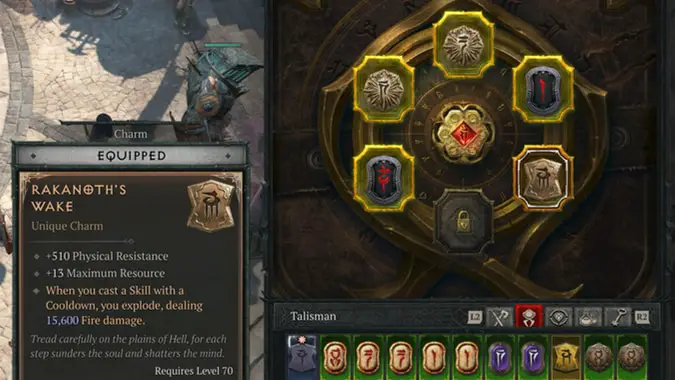
Combine Charms and Seals for new set bonuses. Diablo 4 still doesn’t have armor sets, but you can now collect Charms which provide set bonuses — and you can mix and match Charms depending on the bonuses you want. You can equip one Seal and up to six Charms, each with their own bonuses. The Seal sets how many Charms you can equip, and Charms provide a variety of bonuses, including set bonuses if you collect a set of matching Charms. I collected Slaughter Charms, which gave me 5% damage reduction and x10% damage for equipping two Charms, with an extra 10% damage reduction from elites and x15% damage to elites if I equipped three Charms. That’s a fairly generic bonus, but you’ll find many customized to your class, like the Blood Binder Charms which give Necromancer Blood skills extra fortify (2 piece bonus), increases your maximum life when fortified (3 piece bonus), and drain your life to deal extra damage (5 piece bonus).
You can mix and match set bonuses, and in my playthrough I ran with a pair of two-piece set bonuses plus a unique Charm that did AOE fire damage whenever I cast a skill with a cooldown. There’s a lot of customization options as you combine Charms in different configurations, and I like the extra customization options and power boosts. This is a great way to add the fun of set bonuses without sacrificing the other gear we can equip — which was a frustration in Diablo 3, which required you to collect a full set before you could even start playing set-based builds.
The Horadric Cube is back! It’s been a long time, but we finally have a Horadric Cube again, and it has more options than ever — as long as you take the time to collect the necessary reagents. The cube can add or remove affixes, reroll items, combine items into better items, upgrade items (including common items to unique items), craft unique Charms, and craft Runes. It can also help you target-farm loot from specific Lair Bosses, as they will drop items you can combine in the Cube to become a random unique from their drop table. But perhaps the most interesting option is Transfigure, which appears to provide a random effect, good or bad to an item. I have seen items hugely buffed or lightly nerfed when Transfiguring them — and that risk comes with an added cost, because Transfiguring has a high chance to make the item unmodifiable.
You can add optional reagents that will affect the end result, like items that will favor adding certain stats to gear, so you have a little more control over the chaos. If you’re risking it all by transfiguring an item, one of the possible reagents will remove the most damaging outcomes from the possibilities — but also the most powerful options. This one really tests your risk tolerance.
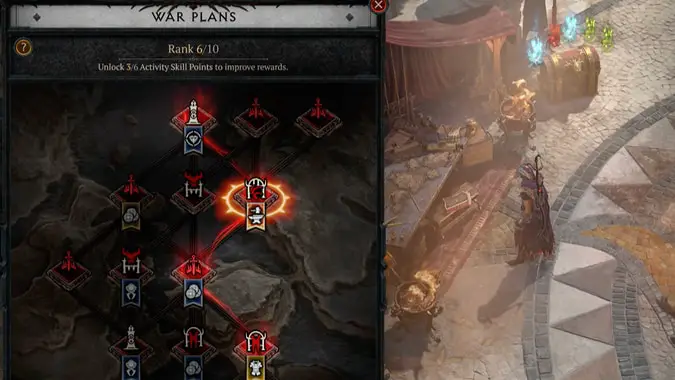
Customizing the end game with War Plans. I was very excited when Blizzard first announced War Plans as a way to pick and choose what you would do in the end game, so I would never have to run an Infernal Horde again — I assumed. When I got to go hands on with War Plans I found that I assumed wrong, and I now have to do more Infernal Hordes than ever. Ugh. However, after doing a great many War Plans, I have warmed to the system, in which you create a semi-customized list of activities to complete, with extra rewards when you finish. The options include all end-game activities: Nightmare Dungeons, Helltides, the Pit, Infernal Hordes, Lair Bosses, Kurast Undercity, and Whispers. (Though I never saw a Whisper appear in a War Plan, the system does have options to customize them.)
War Plans also have their own progression system, letting you tweak these activities to be more difficult or give more rewards (or both). As you play through War Plan activities, you earn XP to advance down a talent-tree like system for each activity which I suspect will help keep things feeling interesting as you grind through your paragon levels. For example, in Nightmare Dungeons you can choose the Horadric Hunter option, which after killing 30 elites in a Nightmare Dungeon will spawn a Horadric Altar, which has a chance to summon more elites to fight, summon three Treasure Goblins, summon the Butcher, gain riches, or what is only described as “terrible misfortune.” From there, you can further customize, deciding whether you would like to get two altars instead of one, or get an altar that only spawns treasure goblins. You can also choose an option that gives Treasure Goblins a chance to open a portal to Goblin’s Retreat when killed in Nightmare Dungeons. I don’t know what I’ll find there, but I’m excited to progress far enough into the tree to find out.
As you progress through each activity track, you also level up War Plans themselves, letting you add more activities — and activities with better rewards — to your War Plan. So as I progressed through the ranks I was less likely to have to run Infernal Hordes. Thank goodness.
War Plans are very quick to do because you can immediately teleport to your next objective from the map, so you can really zoom through many of the activities you’d be doing anyway, just with bonus rewards when you’re done. The system gives some structure to end-game play, and lets you customize activities in interesting new ways. Despite my doubts I found myself enjoying playing through War Plans and unlocking new abilities. Best of all, because of War Plans, I never felt compelled to run the Pit dozens of times in a row until I was bored of it; I just picked the options I liked best from the War Plan and played through them one at a time. It’s a great end-game addition that never felt like a grind.
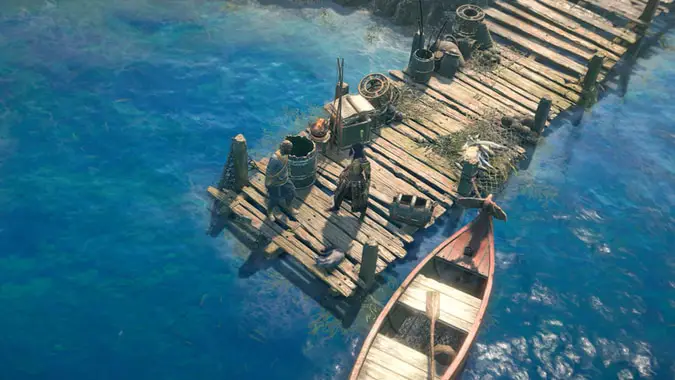
Fishing is the new end game. Forget everything I just said about War Plans. Fishing is the only real end game. Lord of Hatred includes 117 types of fish to catch throughout the game, and I have a strong suspicion some secrets are hiding in this new hobby — and fans of Diablo 3 may notice a familiar character. Fish can be found in most bodies of water and in every zone, though remember if you’re fishing somewhere dangerous: you can’t fish and fight at the same time.
The future of Diablo 4. I only had access to Diablo 4: Lord of Hatred for a week, so I haven’t tried everything the game has to offer. And while I’m confident my initial impressions are representative of the first half of the game, there’s a lot of end game progression still on the table. In the time I played, I did not find any of the end game systems (even Infernal Hordes) feeling tedious or grindy, because War Plans encourage you to do a variety of activities and keep them interesting with new gameplay tweaks — but it’s possible it would feel like a grind after another few weeks of gameplay.
Because boredom is my kryptonite, I tend to fall out of Diablo when progression slows and the grind becomes paramount. It’s possible the game will still reach that point — perhaps even quickly, if I skipped the story and jumped straight into end-game activities during seasonal play — but even in this week, I’ve made more progress than I would have expected, without the game getting tedious.
Seasons in Diablo 4. Seasonal play often feels like Diablo 4 at its weakest, with a borrowed power system that can start to feel repetitive, aggressively marketed cosmetics and battle passes, and very little new story. That means my interest tends to wane quickly season to season, and I think there’s a good chance seasonal play will continue to feel this way.
The first season in Lord of Hatred doesn’t add any new mechanics or gameplay, simply letting the game speak for itself and adding a new battle pass for collecting seasonal cosmetics. That’s plenty of content for this season, because there are a ton of new things to do. But will seasons in Lord of Hatred feel better over the long term? That’s a question I can’t answer, so we’ll have to see how things develop over future seasons — and find out if Blizzard can keep the game exciting over time, or whether it will start to feel like another seasonal slog.
The bottom line: Should I play Diablo 4: Lord of Hatred?
If you enjoyed the original Diablo 4, but have fallen out of the seasonal grind or didn’t enjoy Vessel of Hatred, I think Lord of Hatred knocks it out of the park. It has everything I enjoyed about the original game, with more refined (and fun) gameplay and a more structured end-game, with lots to do even after you’ve finished leveling through the campaign. If you don’t enjoy the end-game grind, I think Lord of Hatred takes longer to get there — though it will probably still turn into a slow grind at the top levels. However, War Plans make the end game much more approachable, and casual players should find it easy to jump in and out with a quick task list that gives big rewards, whereas hardcore players are likely to appreciate the big rewards and the ease of chain-running end game activities.
My biggest concern about Lord of Hatred is long-term play. While I can whole-heartedly recommend playing the game through once, it may become tedious over the long term, particularly as seasons push you to start the leveling grind over again. This is the nature of an ARPG, to be a long-term grinding commitment — and you’ll either be the kind of person who finds starting over to be a fun challenge, or the kind of person who gets bored of this repetition. I don’t know that Lord of Hatred will change this, though I think it’s giving it a good try.
As I said at the beginning, I’ve played 40 hours of the expansion in the past week. I would usually be exhausted of a game by that point — but I’m eager to jump right back in when Lord of Hatred launches. I think this is the best version of Diablo 4 we’ve seen so far.
Diablo 4: Lord of Hatred launches on April 27 (in North and South America), and is available on PC (Battle.net and Steam), PlayStation, and Xbox, with both cross-progression and cross-play. The expansion costs $39.99 (standard edition), and includes the Vessel of Hatred expansion if you don’t already own it. If you haven’t tried Diablo 4 yet, you can buy the base game and both expansions for $69.99 in the Age of Hatred collection.
Originally published April 21, 2026; updated April 24, 2026.
Please consider supporting our Patreon!
Join the Discussion
Blizzard Watch is a safe space for all readers. By leaving comments on this site you agree to follow our commenting and community guidelines.